Projects that connect AI, sensing, and human behavior.
My work spans virtual sensor generation, multimodal learning, wearable computing, and inclusive human-centered systems. These projects share one goal: making behavioral AI more scalable, realistic, and useful.
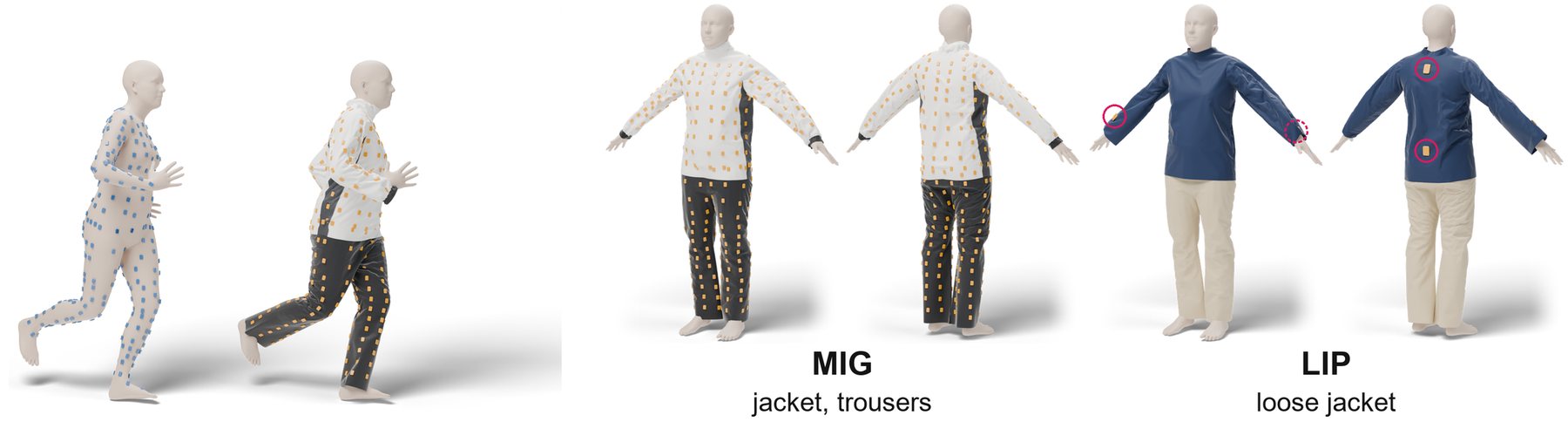
IMUdrape
Virtual IMU data for sensors sewn into clothing.
Sensors in clothing move with the fabric, not the body. IMUdrape generates motion from text, dresses the body in a simulated copy of the deployment's garment, and reads virtual IMUs off the fabric at the real sensor positions. On four clothing-sensor datasets it improves activity recognition and pose estimation over real data alone and over body-mounted virtual data.
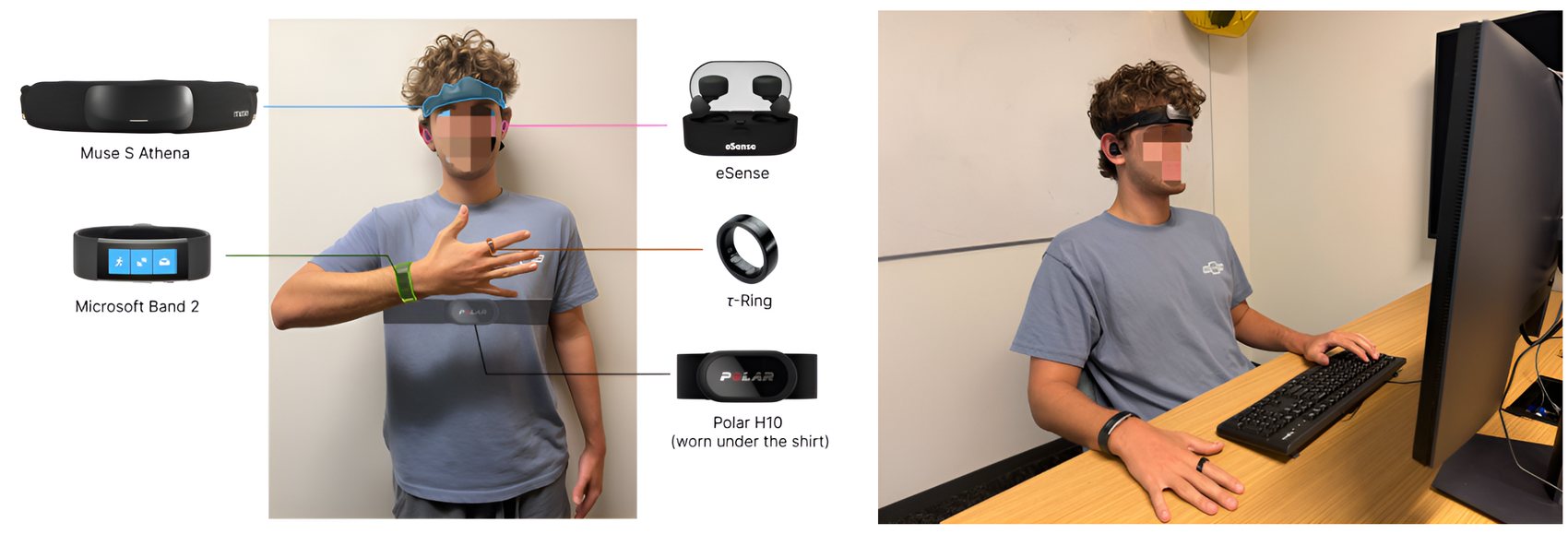
EduGage
Can sensing help us understand when a learner is truly engaged?
EduGage combines PPG, ECG, EDA, EEG, IMU, heart rate, temperature, eye tracking, and interaction data with in-situ engagement reports. The project contributes both a multimodal dataset and practical evidence for lightweight sensing combinations.
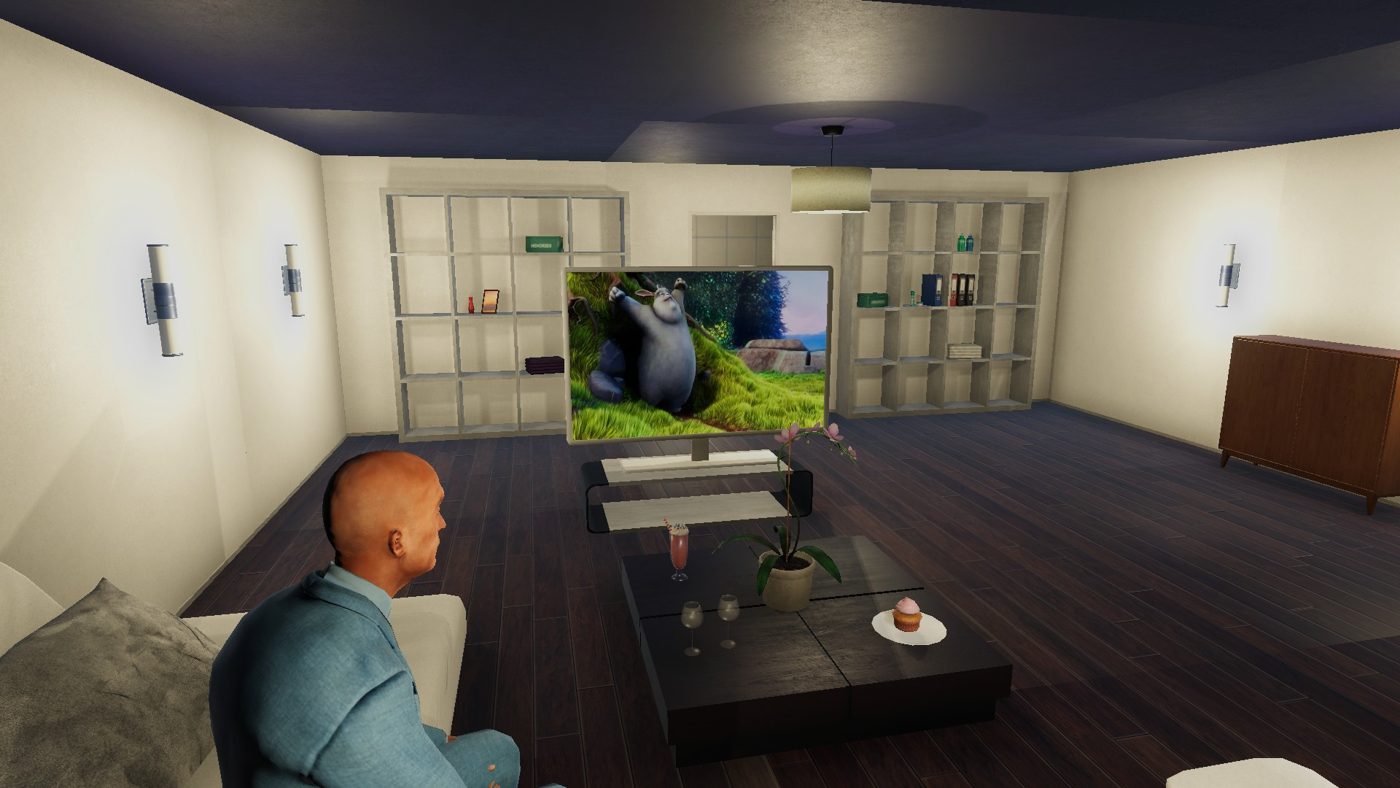
AgentSense
Smart-home sensor data, generated by agents that live there.
LLMs create diverse personas and routines; embodied agents execute them in an extended VirtualHome simulator instrumented with ambient sensors. Pretraining on this data improves recognition, especially when real data is limited.
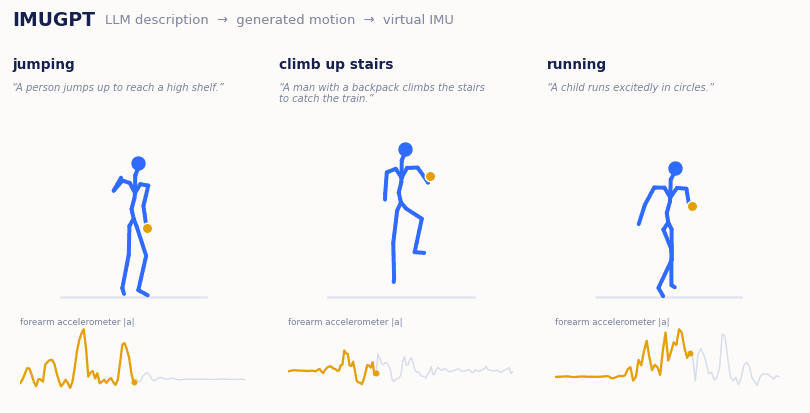
IMUGPT
Describe an activity; generate wearable motion data.
An LLM writes diverse descriptions of an activity, text-to-motion models turn them into 3D motion, and the motion is converted into virtual on-body IMU signals for training HAR models. IMUGPT 2.0 adds a motion filter for implausible clips and a diversity metric that tells you when to stop generating.
StitchSense
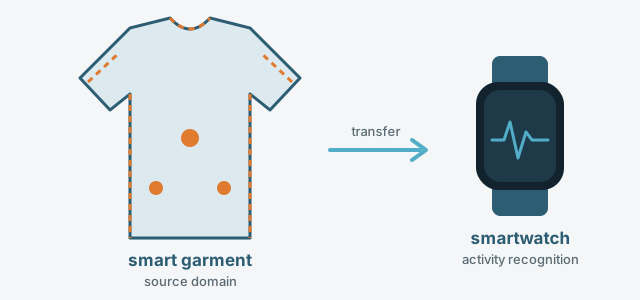
Learn from the garment, recognize on the watch.
Uses sensing from a smart garment as a source domain for watch-based human activity recognition, so data from clothing can help the device people already wear.
Paper
Emotion recognition on the go
Personalized emotion recognition using wearable IMUs, with virtual motion data supporting model pretraining and adaptation.
Paper

Wheelchair transportation sensing
Comparing data-collection strategies for transportation-mode detection with wheelchair users, recognized with a Best Paper nomination.
Paper